Introduction: Why Custom Light Now
Lighting sets the mood and the margins. In nan, that truth hits even harder. Walk into a lofty lobby or a tight studio and watch how a bespoke chandelier changes the flow of people and the feel of the air. We see it in the data: better beam control boosts perceived quality; high CRI raises product appeal; smart power converters cut total load. Picture a ceiling grid tuned like a soundboard—lumen output, dimming curves, and glare control all in sync (no flicker, no fatigue). Bold claim, sure. But the numbers track, and the installs prove it—funny how that works, right?
Here’s the scenario. A space needs identity and efficiency. The ceiling height is odd. The brand palette asks for warmth, but the site runs cool metal and glass. Off-the-shelf can’t bridge that gap. Now ask the core question: which fixture logic scales across use cases without sacrificing vibe or uptime? The comparative answer begins with fit-to-purpose optics and stable drivers, then compounds with maintenance planning and modular parts. Let’s compare what’s working and what isn’t, and why the gaps persist.
Under the Hood: The Hidden Gaps in Standard Fixtures
Why do standard fixtures fall short?
Most stock chandeliers look fine in a catalog. In the field, they fight the room. Scale is off by a meter. Glare hits at eye level. The driver ICs buzz when dimmed below 20% due to cheap PWM control and poor thermal management. Replacement cycles are messy because modules aren’t serviceable. These are not small misses. They impact the guest journey, camera feeds, and even cleaning workflows. Look, it’s simpler than you think: if load distribution, CRI, and beam angles aren’t matched to ceiling height and surface reflectance, the space will always feel “almost right,” never precise.
There’s more. Many traditional builds can’t handle mixed controls—0–10V, DALI, and DMX—without ghosting or drop-offs. Voltage drop on long runs causes color shift. Lenses scatter rather than shape, so your focal points get washed out. Maintenance teams juggle lamps, not modules, so downtime spikes. And when power quality dips, surge protection is absent, which shortens driver life. A custom system solves by mapping optics to zones, specifying constant-current drivers, and using swappable LED engines. That turns a one-off showpiece into an operational asset.
Comparative Outlook: Case Notes and the Next Wave
What’s Next
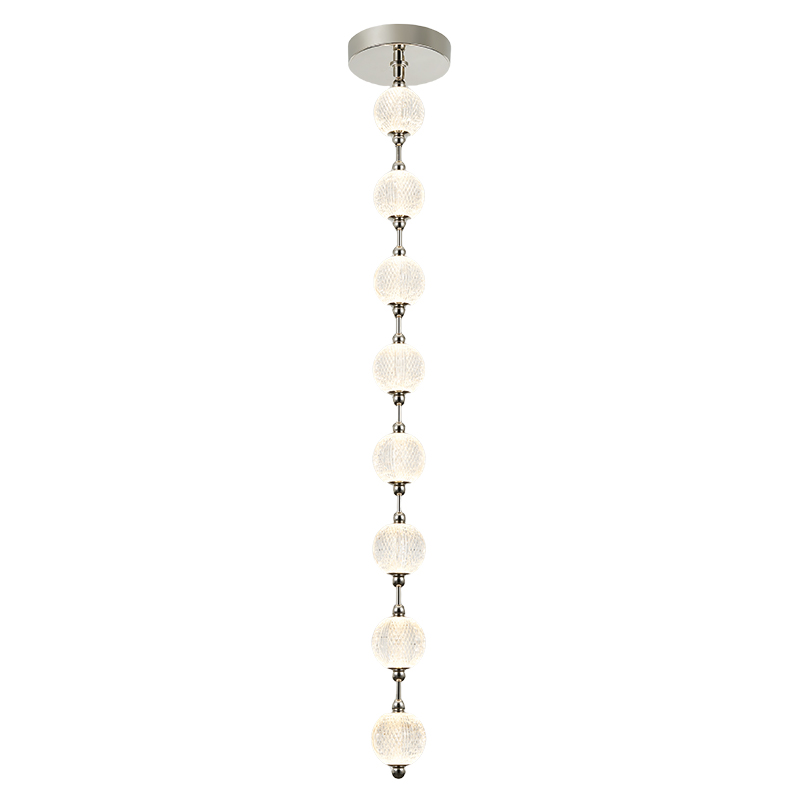
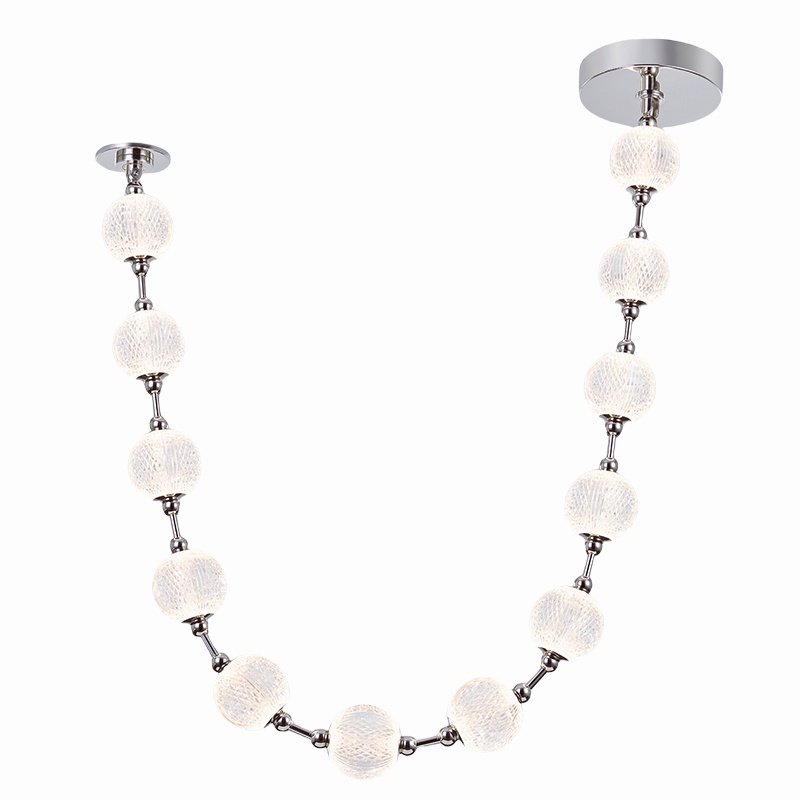
Consider a boutique hotel refresh. The lobby needed presence, but energy caps were tight. They replaced mixed pendants with a modular array styled as a chain crystal chandelier. The core idea was simple: one structural spine, interchangeable optical elements, and constant-current drivers tuned to low-end dimming. Results? Smoother gradients, better skin tones at check-in, and faster turnover in the lounge. The team logged fewer service calls, too. Why it worked: the technology stack respected the site—optics, drivers, and controls formed a coherent system. Not just décor. System design— and yes, it matters.
Now, zoom out. The next cycle favors adaptive controls and cleaner wiring topologies. Think calibrated beam sets, pre-balanced loads, and firmware that keeps dimming curves linear across scenes. In plain terms, spaces shift use. The fixture must shift with them. Compare that to traditional arrays: they freeze the look and lock-in costs. A future-ready custom build uses modular LED engines, sealed optics with proper IP rating, and driver banks with field-addressable channels. It delivers lower noise, stable color, and maintainable parts. The lesson so far: define the job, then let the form follow the electrical and optical plan.
Advisory close-out: choose with metrics, not vibes. 1) Photometric fit: target CRI 90+, R9 support, and verified candela distribution at plan heights. 2) Electrical stability: constant-current drivers, documented low-end dimming to 1%, and surge protection to site spec. 3) Service model: modular LED engines, tool-light access, and parts availability for five years. That’s how you keep the look crisp and the costs sane. For deeper specs and reference builds, see kinglong.