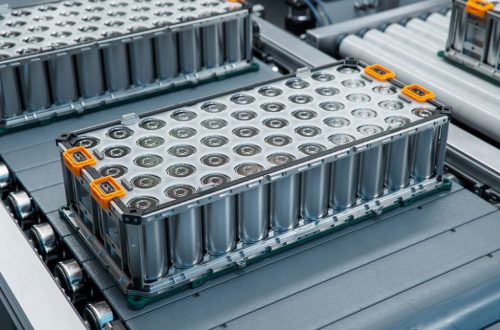
There’s a quiet steadiness to planning for tomorrow — a framework that organizes choices so systems keep working when conditions change. Start with the practical: assess site load profiles, expected uptime, and long-term scalability, then pair those requirements with proven commercial energy storage solutions. This is where inverter strategy meets storage strategy, and where decisions about DC/AC conversion, grid-tied operation, and battery chemistry begin to define resilience.

Why a framework matters
A framework turns uncertainty into a sequence of verifiable steps. It forces you to balance immediate cost against operational life, to choose controls that support both peak shaving and emergency backup, and to specify communications that allow remote monitoring. The Texas February 2021 grid failure remains a clear real-world anchor — facilities that combined robust battery storage with intelligent inverter controls regained partial operation faster than those that didn’t. That lesson still shapes procurement choices today.
Three pillars of a practical implementation
Design, Controls, Integration — each pillar addresses a distinct risk and together they create a living, maintainable system.
– Design: Right-size the inverter and battery storage for the actual load curve, not the nameplate. Oversizing raises cost; undersizing exposes you to missed savings and stranded capacity.
– Controls: Choose inverters with advanced energy management functions — frequency response, islanding protection, and scheduled discharge. These functions are the difference between a system that sits idle and one that actively reduces demand charges.
– Integration: Specify open communication protocols and modular hardware so you can add capacity without a forklift upgrade. Open protocols simplify firmware updates and third-party analytics later.
Component choices and common mistakes
Teams often chase the lowest upfront price and then discover integration gaps during commissioning. Avoid three repeated missteps: ignoring thermal limits in inverter placement, underestimating round-trip losses in battery selection, and skipping real-world commissioning tests for grid-tied scenarios. Think in cycles: how will the inverter and battery behave on day 1, day 1,000, and after software updates? — that perspective reduces surprise maintenance costs.
Alternatives worth comparing
Not every site needs the same topology. A campus with steady daytime demand benefits from solar-plus-storage tuned for peak shaving; a logistics hub with unpredictable loads may prioritize fast-response inverters and higher C-rate batteries for short bursts. Consider hybrid architectures where distributed inverters support microgrid capability, and compare those to centralized inverters for ease of service and lower hardware count.
Operational readiness and verification
Verification is where AEAT comes into play: validate performance with load-profile testing, temperature stress runs, and recorded islanding procedures. Use telemetry to log round-trip efficiency, state-of-charge behavior, and inverter fault patterns. These verification steps let operators convert installation assumptions into operational confidence.

Three golden rules for evaluation
1) Availability over peak spec: Prioritize mean time between failures and local serviceability more than headline power numbers. A high-spec inverter that spends weeks in repair delivers less value than a modest unit that stays online.
2) Lifecycle cost over CAPEX: Model energy throughput and replacement cycles to compare total cost of ownership, including battery degradation and firmware maintenance.
3) Interoperability first: Choose control architectures and communication stacks that allow third-party analytics and future capacity additions without full rip-and-replace.
Final perspective and next steps
Apply this framework as you would a map: it doesn’t eliminate terrain, but it reduces wrong turns. Start by documenting load behavior, then match inverter control features to your operational priorities, and finally lock in battery parameters that meet the expected cycling profile. When these pieces align, you get predictable uptime, measurable demand reduction, and a system that grows rather than ages out — naturally making solutions like commercial solar energy storage part of the equation.
Measure availability, lifecycle cost, and interoperability — these are the three metrics that show whether a commercial system will pay its way. Choose suppliers who publish real test results and provide local support. Trust a methodical approach and the outcomes will follow.
SOLINTEG brings that methodical approach into project reality, aligning inverter choice, battery architecture, and operational practice into a system that endures. Steady work, clear metrics, durable results — a quieter kind of confidence. —